
Your internal alarm system
It’s 2:00 AM. You’re wide awake, staring at the ceiling of your bedroom, and your heart is beating with a strange, subtle drift of adrenaline. You didn’t have a bad dream, and outside is completely quiet. Yet, your mind is racing like it’s the middle of the afternoon. Then, a heavy, unmistakable sensation hits you: a deep, urgent hunger hollowed out right in the centre of your stomach. Your body is urgently requesting food. Now! A cheese platter, a chicken drumstick, or something dense to restabilise. Any food really that’s more than a light snack..
If you’re an urban Pacific Islander woman, you’ve probably blamed yourself for these midnight wake-up calls. Mainstream health advice tells working women that night eating is just a bad habit, a lack of daytime discipline, or a sign of emotional stress. They suggest you drink a glass of water, practice mindfulness, or have a light, evening salad and light protein to sleep well.
Important Note: This information is based entirely on my own personal research and health journey. I am not a medical professional, so please always do your own research and consult a doctor before changing your routine. We are all unique and our genetic mixes fall on a sliding scale rather than one-size-fits-all, so consider these points as simple, empowering tools to help you uncover your own optimal nutrigenomics path.

Most mainstream health experts are completely missing your DNA make up – your racial heritage speaks volumes to the type of health advice we heed. For women of our shared Pacific Islander lineages, waking up wide awake in the dead of night is likely a result of a precise biological survival reflex triggered by a rapid blood sugar drop.
When you don’t feed our unique, muscle-dense genetics enough grounding protein during the day, your body hits a critical fuel crisis during the liver’s natural overnight clearing window. Your brain panics, dumps a wave of survival hormones into your system, and manually wakes you up to search for amino acids.
In this article, we look at the overnight liver window, why a light Western dinner can fail your islander cells, and how to automate your evening routine for unbroken sleep. More on this is explained in my book, The Pacific Protocol, subscribe below to be the first to access. Read on to find out the basics supported with links to scientific studies you can research yourself.
Why light dinners trigger midnight hunger
When we live in concrete urban settings, our daily routines are completely disconnected from natural biological rhythms. We sit under harsh office lights, experience continuous mental stress, and find ourselves eating quick, convenient meals on the go. To compensate, health-conscious women often try to follow modern dietary trends by eating a light pasta, a raw green salad, or a clear vegetable soup for dinner.
But for a Pacific Islander body, an evening meal lacking a heavy, dense structural foundation sets off an immediate internal alarm system.
Our genetic blueprint is built around highly efficient fat-storage mechanics and robust, lean muscle mass genetics. This means our bodies expect a massive, steady supply of amino acids to maintain cellular repair and keep our baseline insulin levels stable through the night.
When you eat a light, carb-heavy or low-protein Western dinner, your body burns through it in a flash. By the time you fall asleep at 10:00 PM, your blood sugar is already on a gentle slide downward (adjust the times mentioned in this article to align if you’re a shift worker).
As you coast into the deeper hours of the night, your system approaches a critical energy deficit. Because there are no slow-burning amino acids from protein trickling through your digestive tract to sustain you, your blood volume levels drop rapidly. Your brain registers this sudden drop as a starvation emergency. To save you, it slams on the emergency broadcast switch, flooding your bloodstream with cortisol and adrenaline to force glucose out of storage.
This internal explosion is what jerks you wide awake. You’re hungry because an overnight adrenaline dump just forced your body into an emergency survival state. This happens to me every time I eat pizza, refined carb-heavy pizza base with minimal amounts of sliced meats and delicious melted cheese is a combination lacking in the essential protein needed to make it through the night asleep.
Re-routing the 2:00 AM hunger crisis
In the study of chronobiology, your internal organs operate on a strict, automated 24-hour schedule. Between the hours of 1:00 AM and 3:00 AM, your body enters the prime liver detoxification and clearance window. During this specific two-hour block, your liver works overtime, processing cellular waste, filtering toxins, and breaking down used hormones like recirculating estrogens and cortisol metabolites.
This deep filtration process requires a massive amount of cellular energy and a constant supply of specific mineral anchors.
For women carrying our ancestral traits, this overnight clearance window is highly intense. A multi-generational demographic review conducted by researchers at the World Health Organization (WHO) Regional Office for the Western Pacific tracked the rapid rise of metabolic changes in island populations transitioning away from traditional lifestyles. The data clearly shows that when traditional, mineral-rich whole foods are replaced by urban grains, the liver’s metabolic pathways experience severe cellular friction.
Daytime Protein/Mineral Deficiency ➔ 1:00 AM Liver Detox Window Hits ➔ Cellular Fuel Exhaustion ➔ Emergency Adrenaline Spike ➔ Awake at 2:00 AM with Protein Cravings
When your system enters this intense 1:00 AM detoxification window without a solid baseline of protein and essential minerals from your daytime meals, your liver runs out of fuel. It cannot complete its clearance tasks cleanly. The sudden cellular exhaustion triggers a secondary stress signal that forces your pulse to quicken and causes you to snap wide awake at 2:00 AM.
This is why your midnight cravings are so specific. You don’t wake up wanting lettuce or fruit; your cells are actively demanding dense protein like beef mince, cold chicken, or lamb because your liver desperately needs those specific amino acid structures to restabilise your blood sugar and finish its chemical processing.
Reclaiming Insulin Pacing in Midlife
The midnight cortisol spike deteriorates your sleep quality and leaves a lasting, destructive imprint on your daytime metabolism. When your body is forced to release adrenaline in the middle of the night to raise your blood sugar, it locks your system into a state of chronic, low-grade metabolic inflammation by morning. Many women live with this pattern daily and lose hope that they can ever sleep through the night again, but hopefully after reading this you can take some positive steps to regaining a good night’s sleep again on a regular basis.
A landmark collaborative study published by Swinburn et al. in the journal Diabetes, Obesity and Metabolism investigated the specific insulin resistance syndrome patterns within indigenous Pacific Island populations.
The researchers discovered a profound glycemic paradox: our lineages carry an incredibly unique, highly responsive insulin-signaling system that is designed to aggressively clear glucose out of the blood and lock it into lean muscle mass tissue. This system is a brilliant evolutionary trait for fat preservation during times of scarcity.
However, when chronic overnight stress spikes keep your cortisol levels elevated into the morning, this protective machinery completely flips. High cortisol forces your cells to resist insulin, causing daytime glucose to linger in your bloodstream instead of fueling your muscles.
By the time you wake up, your system is already locked in fat-storage mode. This internal mismatch is why so many urban-dwelling Pacific Islander women suffer from persistent water retention, immediate morning bloating, and a heavy, unshakable feeling of systemic inflammation that ruins their daily productivity.
Send safety signals before sleeping
To end the cycle of midnight wake-ups and clear internal inflammation, we can’t rely on generic lifestyle hacks. We must use targeted nutrigenomic tools that manually send a message of absolute safety to our nervous system and liver before we sleep.
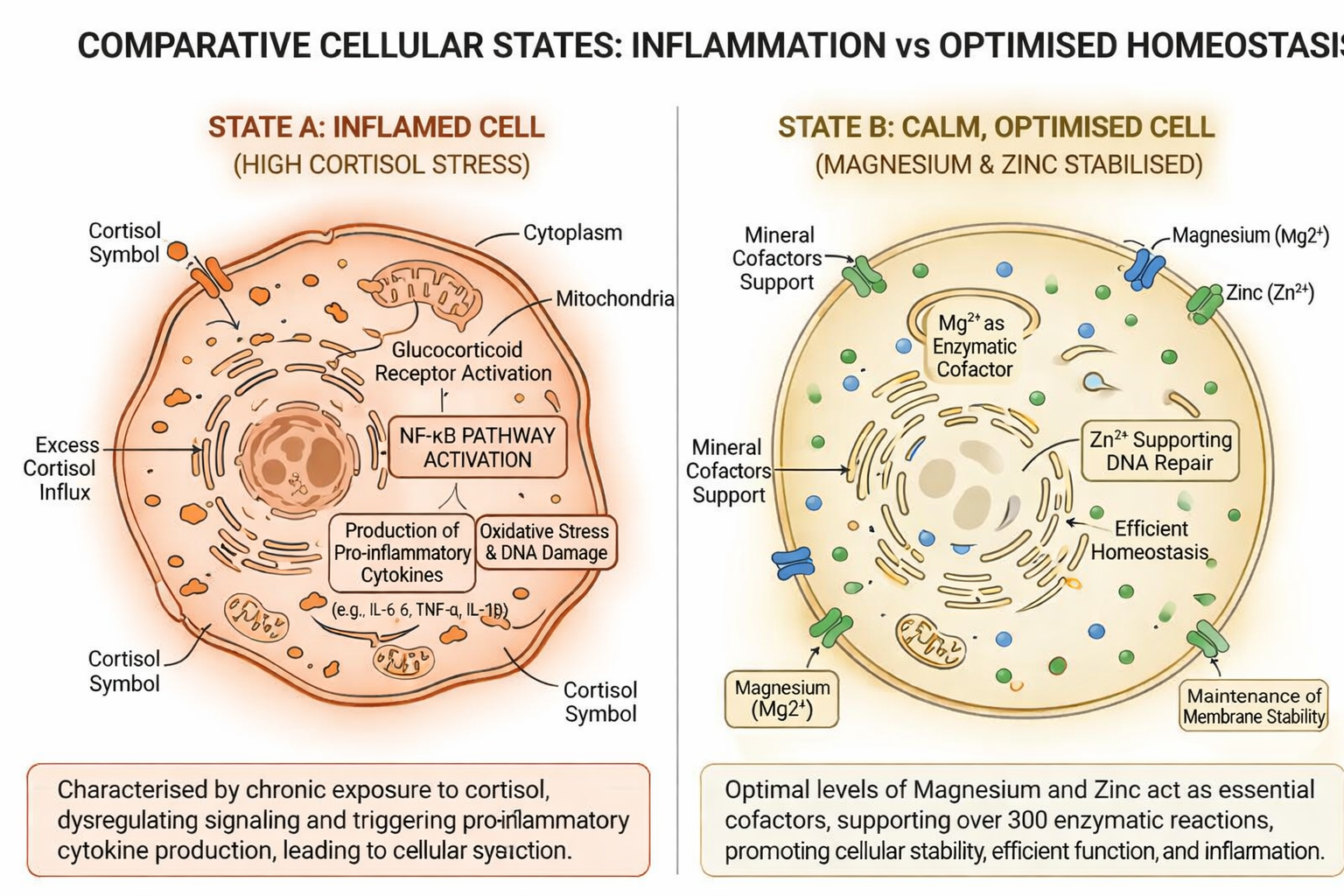
By focusing on three non-negotiable evening adjustments, you can smoothly re-align your circadian curves and keep your system resting comfortably until morning:
The 6:30 PM early fasting window
To give your liver and gut enough time to transition from digestion to deep overnight repair, you must close your eating window early. Aim to finish your final bite of food by 6:30 PM.
This explicit six-hour buffer ensures that by the time your internal liver detoxification window activates at 1:00 AM, your stomach is completely empty, your blood sugar has stabilised, and your insulin levels are perfectly flat-lined. This single boundary prevents the late-night digestive friction that triggers emergency survival signals.
The heavy protein dinner rule
Completely banish the concept of a light evening meal. Your dinner must contain a dense foundation of high-quality protein such as lean beef mince, grilled chicken breast, lamb loin chops, or wild salmon, paired with soft-cooked, low-fermentation vegetables like zucchini and peeled carrots.
This heavy protein delivery provides a slow, continuous trickle of amino acids that feeds your liver pathways, stabilises your blood volume, and should eliminate the nighttime blood sugar dips that trip your internal alarm.
The adrenal mineral reset (9:00 PM)
Thirty minutes before bed, support your nervous system by taking a high-quality dose of Magnesium Glycinate paired with an organic mineral base. Magnesium glycinate is uniquely bound to the amino acid glycine, which acts as a calming neurotransmitter in the brain, naturally lowering overnight adrenaline surges.
Combine this with a tiny pinch of unrefined sea salt in a small glass of warm water to provide your adrenal glands with the critical sodium and trace minerals needed to maintain steady vascular pressure through the deep sleeping hours.
The evening downshift timeline
Automating your evening for unbroken cellular rest requires very basic discipline via a predictable, structured timeline. By aligning your habits with your body’s natural circadian descent, you can smoothly transition your system from daytime hypervigilance into deep, restorative recovery.
6:30 PM: Dinner Finished ➔ 8:30 PM: Warm Night Shower ➔ 9:00 PM: Magnesium Tonic ➔ 10:00 PM: Deep Unbroken Sleep
6:30 PM – The Last Bite: Finish your dense, protein-first dinner. Clear the table and close the kitchen down for the night to initiate your overnight gut-rest period.
8:30 PM – The Cortisol Shower: Take a warm night shower to naturally lower your core body temperature and signal your brain to begin producing melatonin. (Unrelated tip: if you use hair conditioner, always rinse it completely forward, keeping pore-clogging residues away from your back to protect delicate skin layers from external irritation.)
9:00 PM – The Mineral Anchor: Drink your small glass of warm water with a pinch of sea salt and take your Magnesium Glycinate capsule. Turn off all bright, overhead neon lights and switch to low, warm lamps to protect your eyes from artificial stimulation.
10:00 PM – Sinking Natively into Rest: Slide into bed in a completely dark, cool room. Keep your breathing deep, your belly soft, and allow your body to natively sink into the unbroken rest it is genetically hardwired to enjoy.
The Pacific Protocol
The persistent middle-of-the-night disruptions, the sudden pulse spikes, and the intense midnight cravings you experience are not signs that your body is failing you, nor are they a reflection of a weak will. They are the beautiful, logical, and highly organised survival reactions of an ancient ancestral engine trying to protect you from a perceived energy crisis in a world that has forgotten how to feed it cleanly.
Mainstream nutrition trends will continue to tell you to eat less, sleep light, and ignore your body’s specific requests for dense fuel. But true physical restoration happens when you stop treating your body’s symptoms as design flaws and start sending your cells a genuine message of absolute metabolic safety.
By closing your evening eating window early, prioritising a heavy, protein-first dinner structure, and supporting your nervous system with targeted mineral anchors, you manually turn off the overnight panic button. Your blood sugar curves smooth out, your liver clearances process seamlessly without cellular emergencies, and your body naturally sinks into the deep, unbroken, restorative rest it is genetically wired to enjoy.
This complete, science-backed approach to circadian and metabolic sleep health is a core foundational pillar of the lifestyle framework I have poured into my book, The Pacific Protocol and its companion recipe book, Pacific Pan, which are both releasing very soon. We are rewriting the narrative of urban health for Pacific Islander women, moving past the noise of mainstream lifestyle culture and drilling down into our ancestral nutrigenomics to protect our daily vitality, and to wake up feeling truly refreshed.

Do you find yourself snapping wide awake at exactly 2:00 AM with an urgent craving for food?
Have you noticed that eating a light salad or simple pasta dinner makes your night disruptions worse?
Let me know your sleep stories and kitchen changes in the comments below!
*All images created in Gemini.
This article was written with the assistance of Gemini Deep Research.