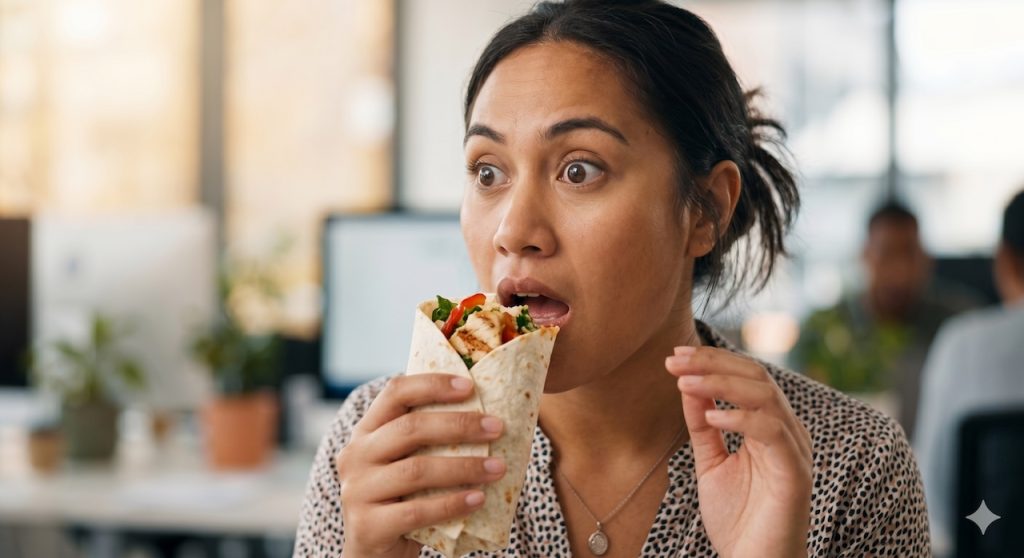

Western software running on Pacific hardware
Most of us know the exact moment our biology decides it’s done playing nice with our urban lifestyle. I know many of you are like me, a Pacific Islander of some sort, partially or fully so, living in an urban setting, or still on an island, eating Western food. Food that we’ve grown up with. We never really questioned it, it was just there in the supermarket, or arriving regularly to the island by boat.
Whether you’re a Hawaiian living in Los Angeles, a Māori living in Sydney, or a mix like me, a Melanesian/Caucasian living on the Gold Coast in Australia, something’s not quite right with the “expert” advice we’ve been given when it comes to healthy eating.
This realisation slowly crept up on me in my late forties. With four children now adults, I had time on my hands. I noticed I’d put on more than a few kilos after being stick-thin my whole life. I started exercising and focusing on what I was eating. Early morning swims and gym sessions followed by a day of “healthy” eating; proteins, salads, broccoli and health shakes, with “Friday night treat night” (FNTN) allowing me one evening per week to fall off the wagon and have a sweet dessert and a gin and tonic. Even the “experts” say a treat day is ok.
But nothing happened. No weight loss, just the usual bloating and tiredness after every meal. If I slicked and tied back my hair, my silhouette was becoming very Homer Simpson-shaped, very quickly.
Education is key. Whenever I face a problem or challenge in life, I educate myself, hours-long deep dives into research like a lab rat on meth in a maze, I need answers and I need answers NOW!
Important Note: This information is based entirely on my own personal research and health journey.
I am not a medical professional, so please always do your own research and consult a doctor before changing your routine.
We are all unique and our genetic mixes fall on a sliding scale rather than one-size-fits-all, so consider these points as simple, empowering tools to help you uncover your own optimal nutrigenomics path.

But what do I do when the research says I’m doing everything right? I bought the most popular diet book for women of my age and stage in life (you know the one) and lived on the recipes to the letter for weeks resulting in very little improvement, still bloating, losing my will to try anything else and just succumb to jam-filled lamingtons, Darrel Lea Rocklea Road, White Choc Almond Magnum ice blocks, gin and tonics every day at happy hour, and all those delicious goodies near and dear to me.
It suddenly occurred to me, the only variable I hadn’t investigated was my race.
Here I was, a half-Papua New Guinean, half-Caucasian woman living in the heart of the concrete jungle, doing exactly what the Western health industry told me to do. I was exhausted, chronically inflamed, and mentally crossing off all the variables that could possibly be hindering my progress. That’s when the lightbulb finally flicked on.
Almost all healthy eating advice from experts is Euro-centric, to be blunt – for white people!
To be clear this is not an us against them thing – many partial Pacific Islanders like myself are half or part Caucasian – so there is no ‘us’ or ‘them’ – most uf us are both, hence the information I provide here is not one-size-fits-all. Most nutrition studies focus on Euro-centric people and so some of it may work for us, some may not – that is what we’re here to figure out.
I have been a frog slowly boiling, growing up in a western culture since I was a toddler with virtually no connection to my Islander people, I’ve been living like a Westerner not really taking notice of my Pacific Islander heritage, I fully assimilated. I spoke, ate, exercised, worked and socialised just like everyone else in my mostly Caucasian circle of family and friends. It suddenly occurred to me, the only variable I hadn’t investigated was my race. Armed with my older brother’s DNA test (I assumed I’d be a close-enough match), and at 50% Melanesian, 50% Caucasian, the pieces started falling into place.
Our predecessors back on the islands didn’t grow up on skim milk, processed deli meats, or raw kale smoothies. They thrived on a beautiful, grounding matrix of starchy root crops, fresh seafood, wild pork, and coconuts. Yet, when we migrate into urban environments, we are fed a standardised Western health paradigm that is almost the exact opposite of what our bodies are genetically hardwired to process.
After burying myself in clinical trials, islander genetic studies, and demographic data, I will be releasing my research in an upcoming book, The Pacific Protocol, alongside its companion recipe book, Pacific Pan, very soon. Consider this draft your exclusive sneak peek into the journey back to metabolic freedom, and subscribe below to join the waitlist to purchase these books.
Whether you are a Melanesian, Polynesian, or Micronesian woman living in a bustling city like Brisbane, Auckland, or Sacramento, or navigating changing food landscapes back home on the islands, your body carries a profound genetic legacy. Today, we are pulling back the curtain on why modern “health foods” trigger metabolic friction in our bodies, what our ancestral genome actually needs to thrive, and how we can work with our unique biology to feel energised and balanced.

Why the Pacific genome is different
To understand why a modern urban lifestyle makes us feel so unwell, we have to look back at the incredible history of Oceania. The vast geographical expanse of Melanesia, Polynesia, and Micronesia is not just a place of breathtaking beauty; it is a unique evolutionary laboratory. For thousands of years, our ancestors endured massive selective pressures. Long-distance sea voyages, unpredictable weather patterns, and periods of severe nutrient scarcity meant that only the most energy-efficient individuals survived.
As a result, the Pacific genome forged what evolutionary scientists call a “thrifty” genetic architecture. Our bodies became absolute masterpieces at storing energy, conserving calories, and maintaining a robust immune-inflammatory response to protect us from tropical pathogens.
The bioenergetic engine: the CREBRF gene
At the absolute core of our nutritional genomics is a gene called CREBRF (specifically the rs373863828 missense variant). This magnificent marker of human history is almost exclusively found in individuals of Pacific Islander ancestry. At a cellular level, this variant acts like a biological conservation program, telling our fat cells to store lipids aggressively to keep us alive during a perceived starvation event. It’s like having an ultra-efficient “battery saver mode” built into your body’s cells.
Interestingly, look at how this variant moves across some of the main Pacific Islands:
- Polynesia: The allele frequency reaches its global zenith here, sitting at a massive 25.9% in Samoan populations and up to 23.4% among New Zealand Māori.
- Micronesia: Moving into places like Guam and Saipan, the frequency sits at about 4.2%, where it still packs a massive physiological punch.
- Melanesia: Further west, in Papua New Guinea, the variant is rare or unobserved, indicating that western Pacific populations developed distinct, highly heterogeneous metabolic survival traits.
The “healthy weight” illusion
In standard Western medicine, an elevated Body Mass Index (BMI) is automatically treated as a fast track to Type 2 Diabetes (T2D). Yet, carriers of the CREBRF variant experience what scientists call a “discordant” relationship between body mass and glycemic risk. Even though the variant can elevate BMI, it simultaneously provides a paradoxical 30% to 50% reduction in diabetes risk.
Why? Because our bodies handle energy partitioning differently. The variant shifts energy away from dangerous visceral fat surrounding our organs and channels it toward lean mass distribution, giving us higher relative lean mass genetics. This skeletal muscle acts as a massive physiological sink that helps clear glucose from our bloodstream.
But what happens when this ancient, beautiful machinery is suddenly flooded with white flour, polished rice, industrial seed oils, and constant emotional threat? The survival mechanisms mismatch. The protective system flips, and instead of building healthy lean mass buffering, our bodies spark a state of chronic, internal emergency.
The hidden toll of modern “health” paradigms
When we live in urban centers, we are constantly told that standard Western health foods are universally beneficial. We are told to load up on dairy for bone health, eat raw kale salads for detoxing, and try low-carbohydrate or ketogenic protocols to shed weight. These aren’t necessarily unhealthy foods, but for a Pacific Islander woman, especially as we approach midlife and the post-reproductive transition, these foods introduce severe metabolic friction.
The lactose bottleneck
Let’s talk about one of my favourite food groups, dairy. Delicious. Traditionally, our island diets were entirely devoid of milk from non-human sources, we never milked animals. Because of this, the prevalence of lactose malabsorption and clinical lactose intolerance in traditional Pacific cohorts is exceptionally high, frequently exceeding 60%. As mentioned, health is not one-size-fits-all and my sliding scale of what western foods I can and can’t tolerate will differ from yours, so when it comes to dairy, I seem to be able to digest it just fine without any bloating or other negative affects. Thank goodness because fresh cream and cheese are in my top favourite foods list!
Because islander peoples never traditionally milked animals, for many of us, our bodies simply don’t make enough of the lactase enzyme needed to break down dairy. In fact, when scientists look at traditional Pacific cohorts, they find that the prevalence of lactose malabsorption and clinical lactose intolerance is exceptionally high, frequently exceeding 60% according to a landmark breath hydrogen study published on PubMed.
If you have issues when consuming dairy, it’s likely because the undigested lactose travels straight to the colon, where bacteria ferments it prematurely. This fermentation produces excess gases and carbonic acid, leading to immediate bloating, severe abdominal girth increases, and systematic lethargy. For islander women over 45 who are told to consume dairy to protect their bones, this chronic gastrointestinal irritation backfires, triggering low-grade systemic inflammation that actually undermines bone mineral density.
Goitrogens and the thyroid axis
Another profound example of metabolic friction is the rise of goitrogenic vegetables; raw, cruciferous superfoods like kale, broccoli, cauliflower, and cabbage. These vegetables contain compounds that competitively inhibit our thyroid gland from taking up iodine. In many Pacific lineages—particularly in Melanesia, where transitioning diets have replaced iodine-rich coastal seafood with processed urban grains—this creates a dangerous cocktail. Broccoli is another of my favourites however, I was in discomfort digesting it and since swapping it out for seafood, the symptoms have disappeared.
When we consume these heavy goitrogenic vegetables raw, they release compounds that competitively block our thyroid from grabbing iodine. This constant friction forces a sustained rise in Thyroid-Stimulating Hormone (TSH), causing thyroid cells to hyper-proliferate, which researchers on PMC have directly linked to elevated thyroid cancer risks in our lineages. Simply put, your thyroid is the “gas pedal” for your metabolism, and it runs on iodine (which comes from fresh seafood). Modern health trends tell us to eat big salads or coniferous greens. But raw greens contain natural defense chemicals that act like a foot slamming on your thyroid’s brakes. If you aren’t eating tons of seafood to push back, your thyroid has to work twice as hard, slowing your energy to a crawl and causing chronic fatigue.
In places like New Caledonia, Melanesian women suffer from some of the highest annual incidence rates of thyroid cancer globally, likely driven by these transitioning dietary mismatches.
The ketogenic paradox and metaflammation
What about high-fat, low-carb keto trends? Our ancestors did eat plenty of healthy fats from whole coconuts, but that fat was always wrapped up naturally inside a high-fiber, vitamin-rich food structure. Modern ketogenic (keto) diets look very different; even when people choose high-quality grass-fed meats or organic fats, these plans still rely heavily on isolated, highly concentrated fats and oils that lack the diverse, natural plant nutrients our islander bodies evolved to thrive on.
For a woman carrying a “thrifty” metabolism, an influx of refined Western fats acts as a cellular signal of severe deprivation. The body aggressively partitions these refined fats into visceral adipose tissue (VAT) expansion—deep belly fat. This deep belly fat is the primary driver of metaflammation—a state of chronic, low-grade metabolic inflammation that impairs our gut immunity and causes that heavy, unshakable feeling of post-meal exhaustion and lethargy.
The interconnection of trauma, cortisol, and the gut-brain axis
We cannot talk about physical health without addressing our lived experiences. For many of us, navigating an urban environment is compounded by layers of life stress, childhood instability, cultural dislocation, or relational trauma. As someone who has navigated deep personal stress and the complex hypervigilance of survival environments, I learned firsthand that trauma is not just psychological; it is biological self-protection that gets stuck in the “on” position.
When your nervous system is in a constant state of alert, scanning for safety, it enters a chronic sympathetic “freeze” or “fight-or-flight” loop. Your brain continuously signals your adrenal glands to release cortisol. Over decades, this creates what I call the Trauma Physiology Quadruple:
Plunging stomach acid: High stress tells your body to divert blood flow away from digestion. Your stomach acid production plummets, meaning proteins cannot be broken down properly, food sits too long, and early bacterial fermentation begins.
Sluggish motility and SIBO: Chronic cortisol shuts down intestinal movement. When motility stalls, bacteria from the large bowel migrate upward into the small intestine, leading to Small Intestinal Bacterial Overgrowth (SIBO). This is why you bloat immediately after eating almost anything.
Liver congestion and hormone recirculation: A sluggish gut overloads the liver. When phase-2 liver clearance pathways lack critical mineral anchors (like zinc and magnesium), the liver cannot properly clear used hormones. Instead, testosterone-like metabolites and estrogens recirculate through your system, erupting as chronic, painful adult back acne.
Disrupted cortisol rhythm and night hunger: Under balanced conditions, cortisol should spike in the morning and drop low at night. But chronic survival stress flips this curve. You wake up exhausted, experience an energy crash at 3:00 PM, and experience an adrenaline/cortisol surge late at night. This midnight cortisol spike drops your blood sugar rapidly, triggering intense night hunger signals and specific cravings for dense protein to restabilize.

Ancestral foods is the solution to glycemic stability
The path out of this metabolic friction isn’t found in counting calories or buying standardised Western meal plans. It is found by returning to the traditional, starchy food matrices that are uniquely compatible with the Pacific genome.
Taro and the Ileal brake
Take native taro (xanthosoma sagittifolium), a legendary cornerstone of the traditional Pacific diet. Unlike refined urban grains like white bread or jasmine rice, native taro starch is completely intact, boasting a massive 41% resistant starch (RS) profile. In dynamic clinical models of the human gastrointestinal tract, native taro starch exhibits a 1.5-fold reduction in digestibility compared to glucose.
Because it digests so beautifully and slowly, it travels further down your digestive tract to the distal part of the small intestine: the ileum. This activates a spectacular feedback loop known as the “ileal brake”. The ileal brake naturally slows gastric emptying, blunts the post-meal insulin spike, and signals your brain to release the satiety hormones GLP-1 and PYY. It provides perfectly sustained, flat-line energy while completely bypassing the rapid glucose surges that trigger metaflammation. This switch tells your brain, “We have plenty of food, slow down digestion, and turn off the hunger cravings.” It gives you perfectly flat, steady energy all afternoon.
Accessible alternatives, or next best replacements, for taro in western supermarkets are; sweet potatoes (specifically white-fleshed varieties), Russet or Sebago Potatoes or Cassava (Yuca) if available can be found in exotic produce aisle or frozen section.
Remember to eat these last in your meal.
Restoring the ancestral balance
When we pair our starchy root crops correctly, our biology is optimised to run seamlessly. By implementing a protein-first eating order—consuming our chicken, fish, or beef mince before moving to our cooked vegetables and root starches—we prime our stomach acid production, slow down our glucose absorption, and smoothly step into a fat-burning baseline.
The midlife visceral fat and muscle connection
As Pacific Islander women enter the fifth decade of life and beyond, our bodies undergo a very distinct hormonal shift compared to the Caucasian experience. In our pre-menopausal years, our superior bone mineral density (BMD) is heavily anchored by our bone-free, fat-free lean mass. The mechanical load of skeletal muscle is what maintains our skeletal strength.
However, as we transition into menopause around age 50, the sharp decline in estrogen impairs our mitochondrial efficiency. Our resting metabolic rate naturally drops, and this hormonal shift can cause visceral adipose tissue (VAT) to triple around the midsection.
Training the slow-twitch system
Because of our indigenous Pacific ancestry, our bodies possess a beautiful genetic bias toward slow-twitch (Type I) muscle fiber dominance. Our muscle structures are evolutionary masterpieces designed for endurance, rhythmic pacing, efficient oxygen utilisation, and steady fat oxidation—not explosive, high-stress bursts. Again, the sliding scale depending on the partiality of your islander heritage can impact this, your non-islander genes may give you a fast/er-twitch system – research and find what suits you best based on your body’s response to various exercises.
When urban islanders force themselves through high-intensity HIIT workouts, bootcamps, or fasted morning cardio, it triggers a severe cortisol spike. For our specific physiology, this overstimulation actually shuts off fat burning and locks visceral fat directly onto our midsection. The solution? We must prioritise steady, low-impact, rhythm-based movement that supports our slow-twitch capacity, such as gentle rebounding, slow strength training, and nasal-breathing walking intervals. Again, this may vary – do your own research and experimentation. For your optimal exercise window, read the next section.

The Pacific Protocol
The health, vitality, and radiance of a Pacific Islander woman in her midlife years is not a matter of fitting into a standardised, one-size-fits-all Western dietary mould. Our bodies are living tapestries of human resilience, carrying a magnificent genetic blueprint forged across eras of selective pressure for energy efficiency and survival.
When we try to force this ancient island genome to process the cold, chemically stripped, highly fermented, and stress-fuelled components of a modern Western diet, the resulting inflammation is not our fault—it is simply a biological collision. True metabolic restoration, clear skin, deep restful sleep, and the smooth shedding of visceral fat do not require extreme restriction. They require precision nutritional scaling.
By stepping away from raw greens, late-night sugars, and chaotic workout schedules, and returning to the grounding strength of protein-first meals, cooked low-fermentation vegetables, and magnificent root starches like taro, we put our digestive systems back “online”. When we wrap this in targeted botanical protocols to activate our metabolic pathways, and give our nervous system a genuine message of safety, our biology responds with incredible speed.
This is the exact lifestyle framework I have poured into The Pacific Protocol and its accompanying recipe book, Pacific Pan, which are launching very soon. Together we are rewriting the narrative of health for the modern urban islander woman.
What part of your urban diet or stress routine resonated most with you?
Are you struggling with bloating, or ready to swap your raw greens for grounding root starches?
Let me know in the comments below!
*All images created in Gemini.
This article was written with the assistance of Gemini Deep Research.